Which retirement system you fall under can change your lifetime military pension by hundreds of thousands of dollars. This guide explains the four systems — Final Pay, High-36, REDUX, and the Blended Retirement System (BRS) — and how to estimate your retirement income under each.
The four military retirement systems
| System | Who it generally covers | Core formula |
|---|---|---|
| Final Pay | Entered service before Sept 8, 1980 | 2.5% × years served × final base pay |
| High-36 | Entered after Sept 8, 1980; didn't opt into BRS | 2.5% × years served × average of highest 36 months of base pay |
| REDUX | Legacy option with career status bonus; closed to new elections | Reduced multiplier before age 62, with a one-time bonus taken mid-career |
| BRS | Entered on or after Jan 1, 2018, or opted in during 2018 | 2.0% × years served × High-36 average, plus TSP matching up to 5% |
High-36 in practice
At 20 years of service, High-36 pays 50% of your highest-36-month average base pay (2.5% × 20). Each additional year adds 2.5%.
BRS in practice
BRS trades a lower pension multiplier (2.0% per year — 40% at 20 years) for government TSP contributions: an automatic 1% of base pay plus matching up to a total of 5% when you contribute 5%. That makes your TSP growth a central part of BRS retirement planning, and it gives members who leave before 20 years something to keep.
Estimate your retirement income in the app
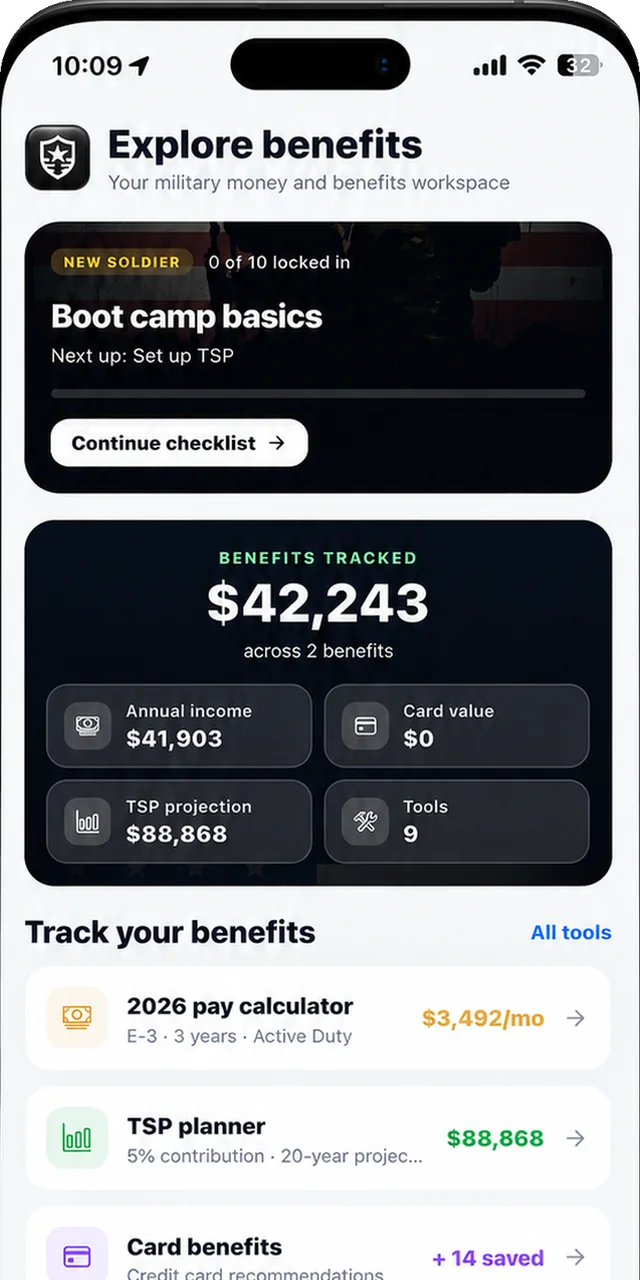
- Download Military Benefits Tracker on the App Store.
- Open the Pay Calculator and switch to Retirement.
- Choose your retirement system — High-36, BRS, REDUX, or Final Pay.
- Enter your pay grade and years of service at retirement.
- Review the estimated monthly retirement income, and pair it with the TSP planner for a fuller BRS picture.

Estimate your military retirement
High-36, BRS, REDUX, and Final Pay estimates plus TSP projections — in one private app.

Estimates only. Retirement calculations are educational estimates, not official determinations or financial advice. Your branch's retirement services office and DFAS are the authoritative sources.
Frequently asked questions
What's the difference between High-36 and BRS?
High-36 uses a 2.5% multiplier per year; BRS uses 2.0% but adds automatic and matching TSP contributions up to 5% of base pay, plus mid-career continuation pay.
Which retirement system am I under?
Generally: Final Pay before September 8, 1980; High-36 after that if you didn't opt into BRS; BRS if you entered on or after January 1, 2018, or opted in during 2018.
How is Guard and Reserve retirement different?
It's based on retirement points converted to equivalent service, and retired pay generally begins at age 60 (sometimes earlier with qualifying active service).
Related guides
Sources
- DoD Military Compensation — Retirement
- DFAS — Retired Military & Annuitants
- Thrift Savings Plan (TSP.gov)
Military Benefits Tracker is an independent resource and is not affiliated with, endorsed by, or sponsored by the U.S. Department of Defense, the Department of Veterans Affairs, or any government agency. Calculations are estimates for educational purposes and are not financial, legal, tax, or medical advice. Always confirm retirement rules and figures with the official source.